From the savannah to the permanent glaciers, on a journey to the roof of Africa
If you dream of climbing Kilimanjaro, this is the itinerary for you. You will reach the highest peak in Africa while experiencing some of Tanzania’s most spectacular natural environments. The remarkable variety of landscapes found on the mountain is reflected in the succession of ecosystems that unfold from its lower slopes all the way to Uhuru Peak, the highest point on the African continent.
6 days climbing Kilimangiaro
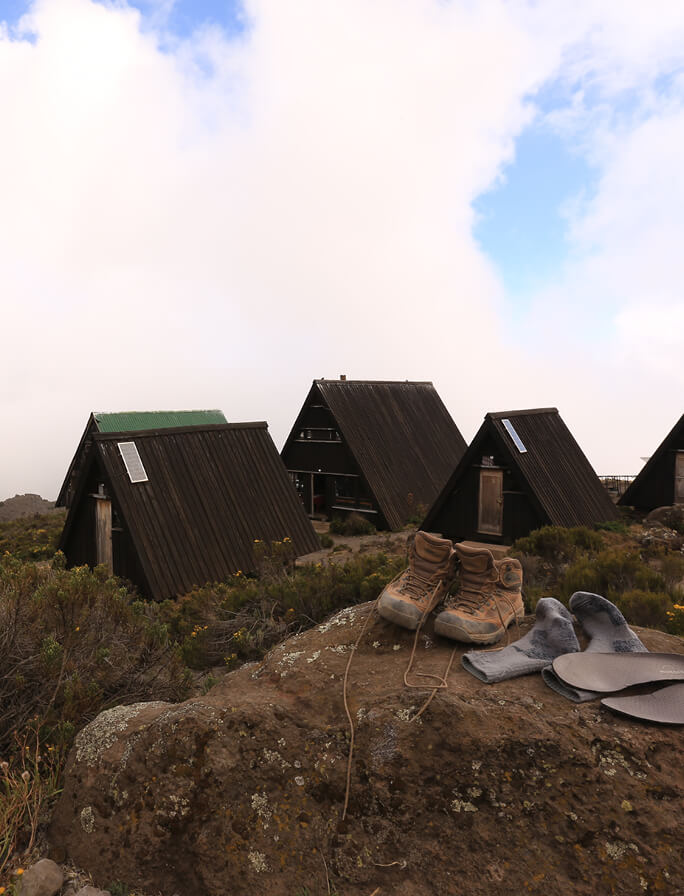
For the Kilimanjaro climb, we propose a 6 day trek along the Marangu Route, the shortest and least demanding route to the summit. It is also the only route offering accommodation in mountain huts with beds and lighting, as well as running water and toilet facilities at the lower altitudes. The expedition is supported by a dedicated mountain team consisting in 1 lead guide, 1 additional assistant guide for every 3 climbers, 1 cook for every 8 climbers, 2 porters per climber.
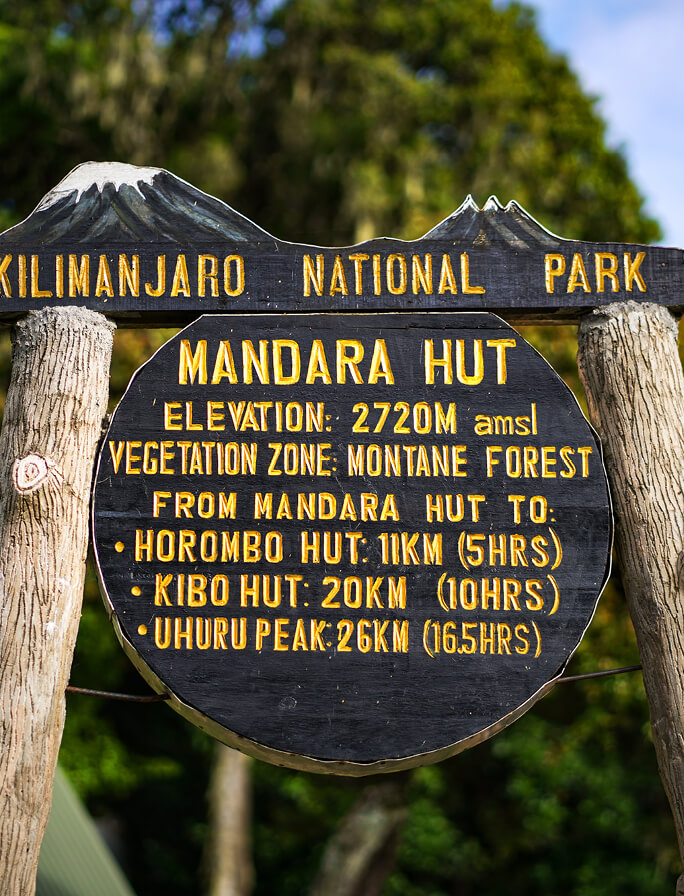
The ascent begins on the lower slopes of Kilimanjaro, where the landscape is dominated by savannah and wildlife such as elephants, buffaloes and antelopes can sometimes be seen. As the climb progresses, the vegetation becomes increasingly lush. You will pass through a true rainforest of giant ferns and eucalyptus trees, where black-and-white colobus monkeys may occasionally be spotted. The first stage ends at the Mandara Huts, at an altitude of approximately 2,700 metres. Once at camp, short walks can be taken to enjoy the surrounding scenery.
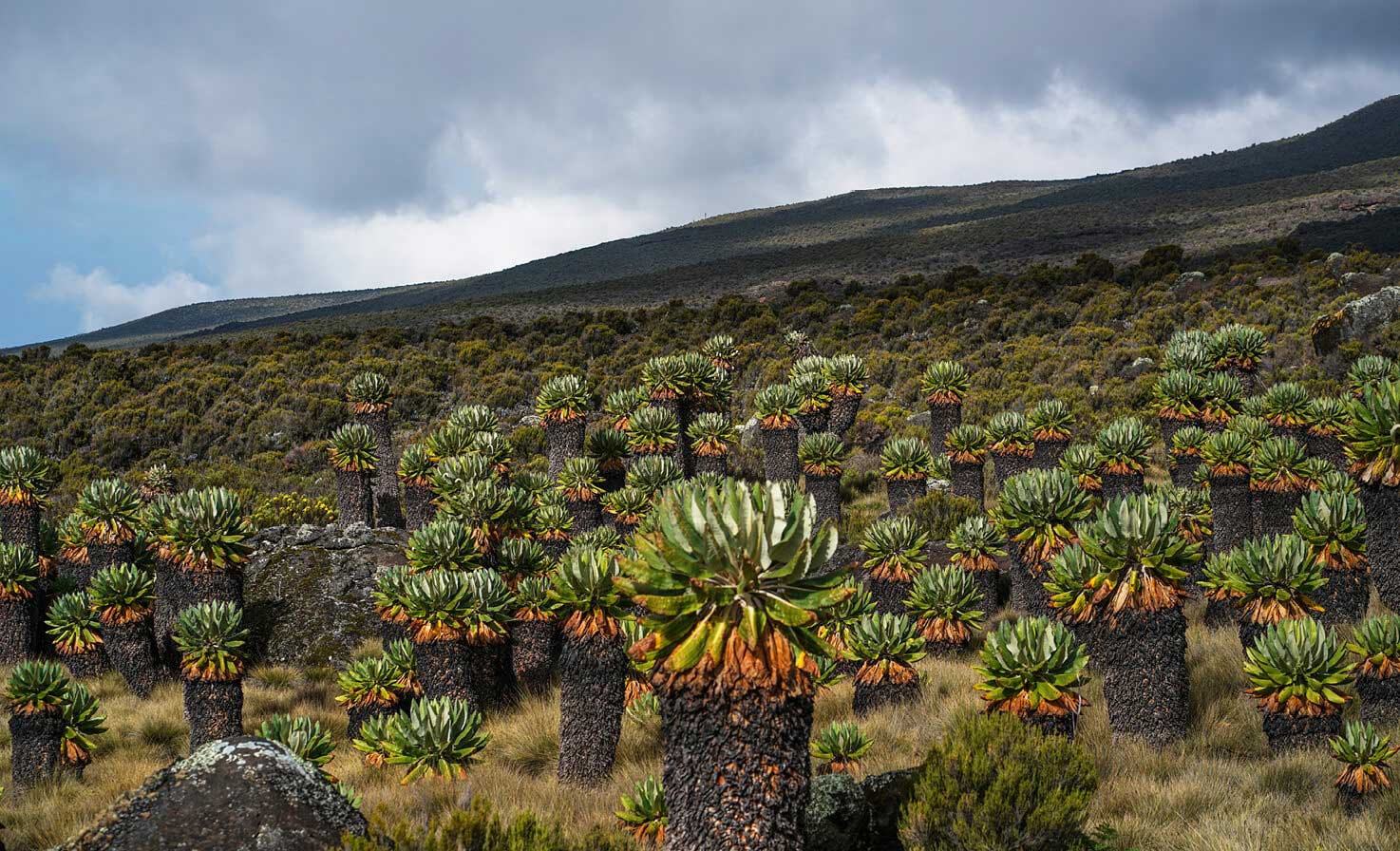
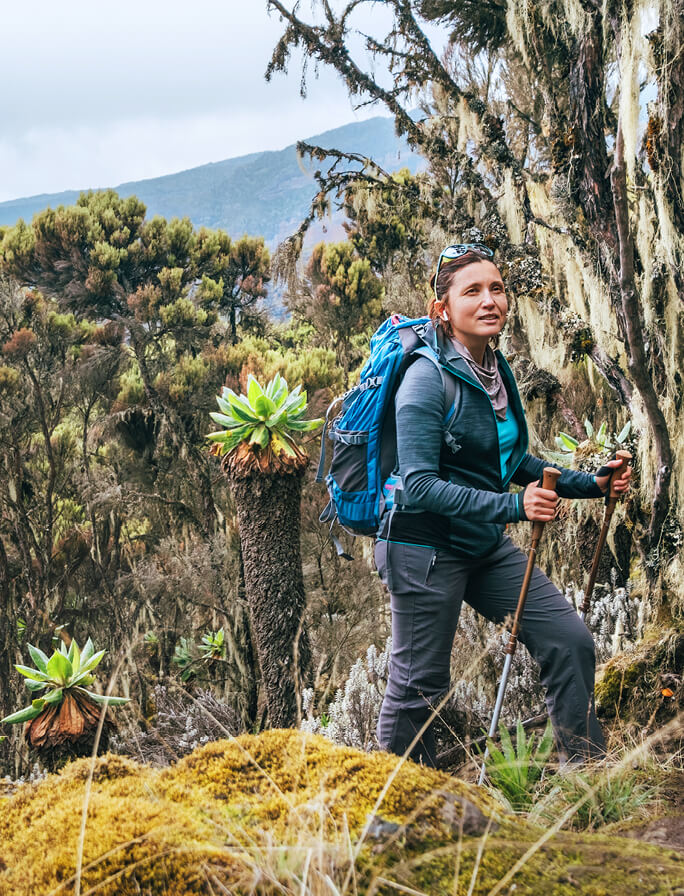
The second stage leaves the rainforest behind and enters a moorland landscape characterised by giant lobelias, giant groundsels and low shrubs.
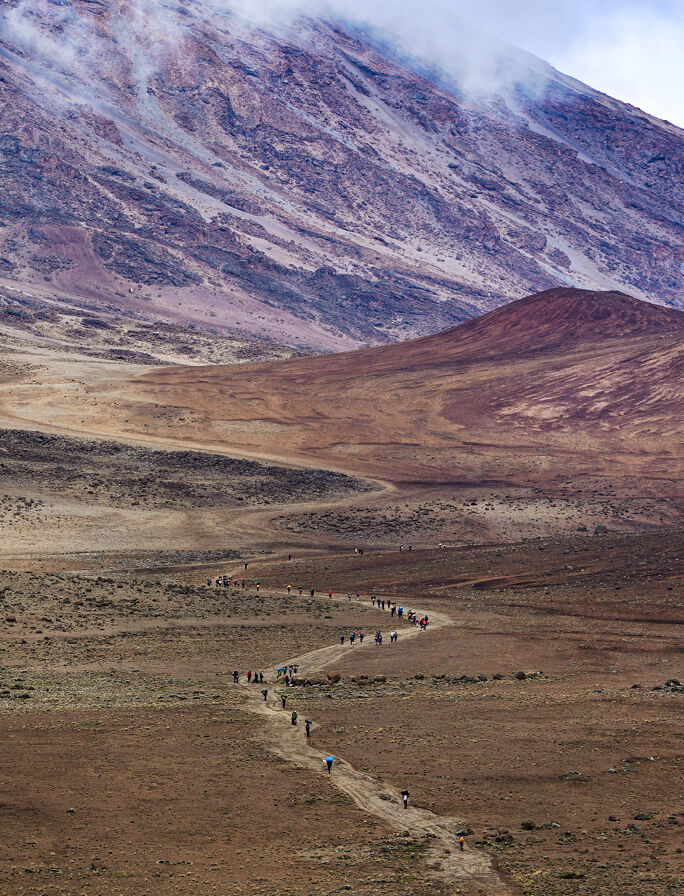
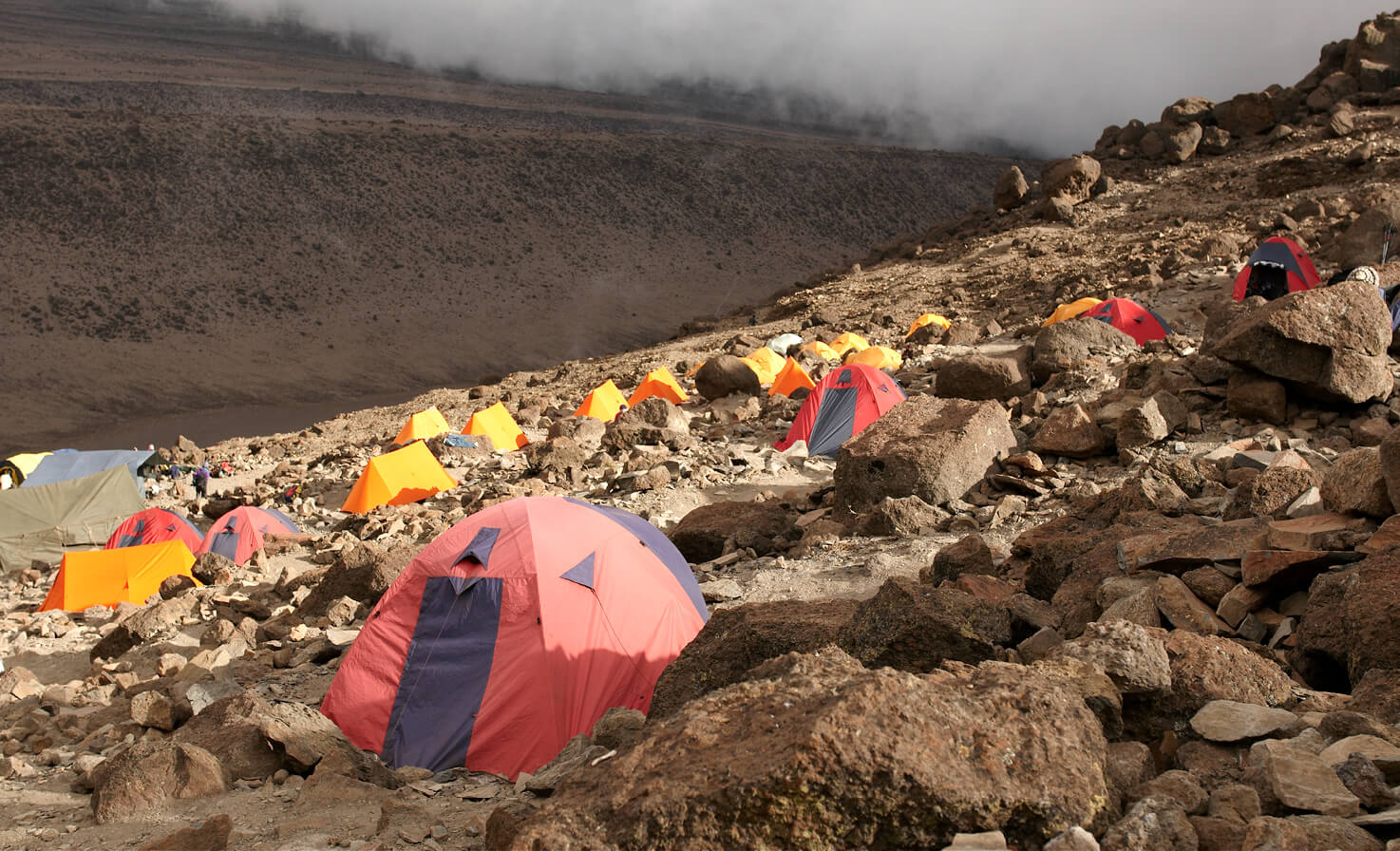
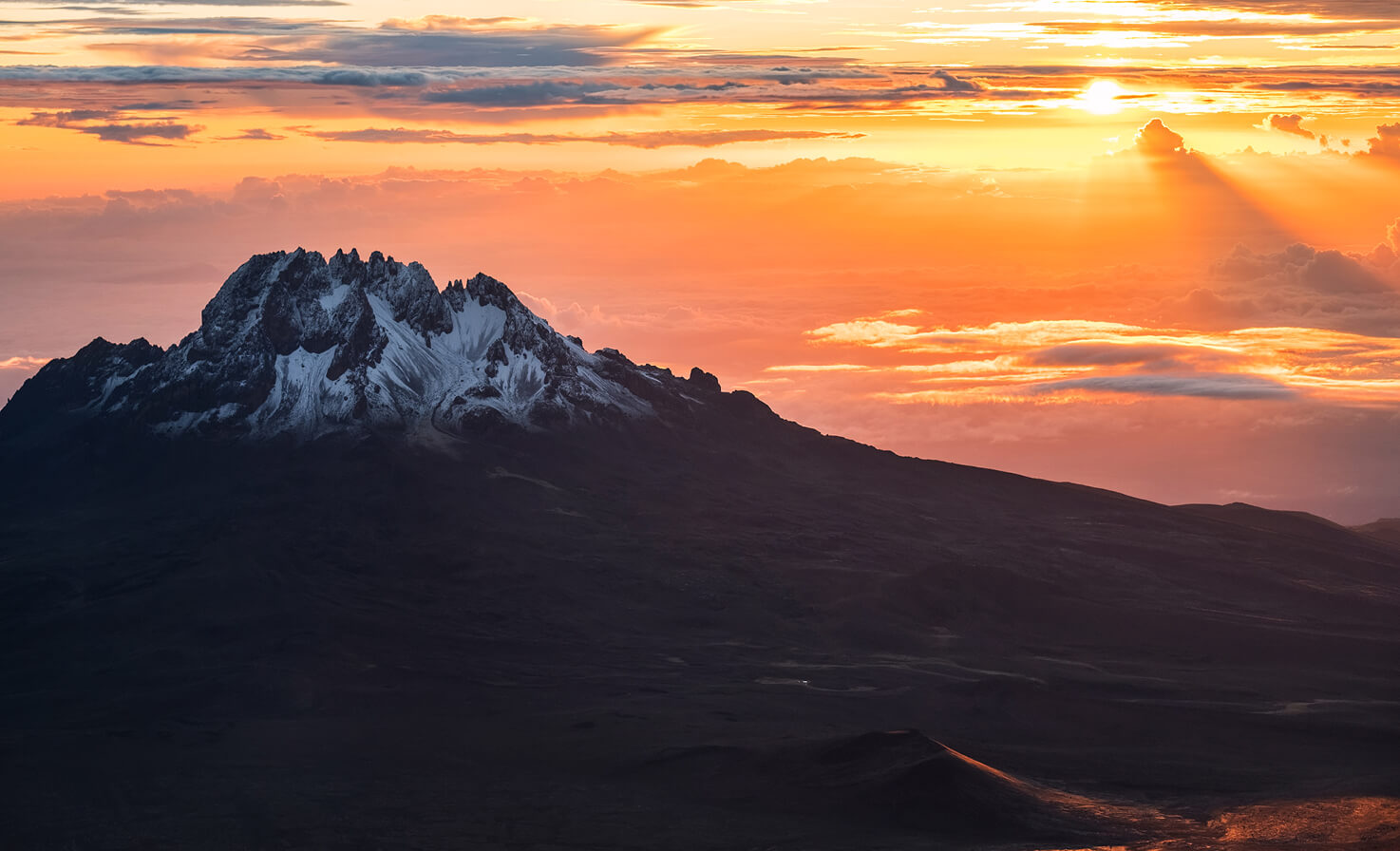
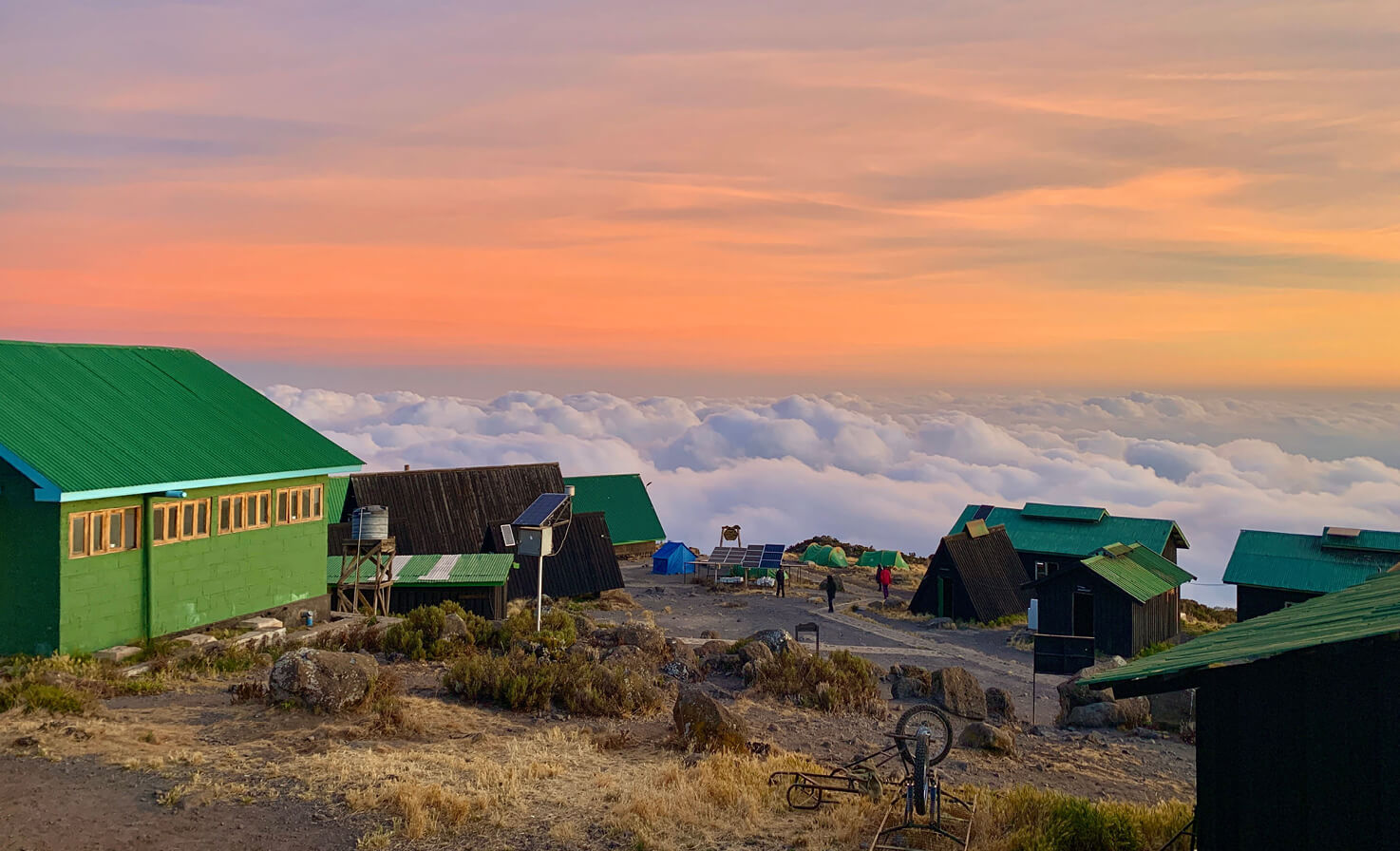
The trail follows the slopes of Mawenzi, the eastern volcanic cone of the Kilimanjaro massif, before reaching the Horombo Huts at 3,720 metres above sea level. At this altitude, the effects of acclimatisation may begin to be felt. For this reason, an additional acclimatisation day can be added before continuing the ascent. Beyond Horombo, the moorland gradually gives way to a rocky alpine desert. You are now crossing the saddle that links Mawenzi to the Kibo volcanic cone. The trail continues to the Kibo Huts at 4,720 metres, where climbers rest and prepare for the summit attempt.
The final ascent begins during the night, allowing arrival at the crater rim shortly after sunrise.
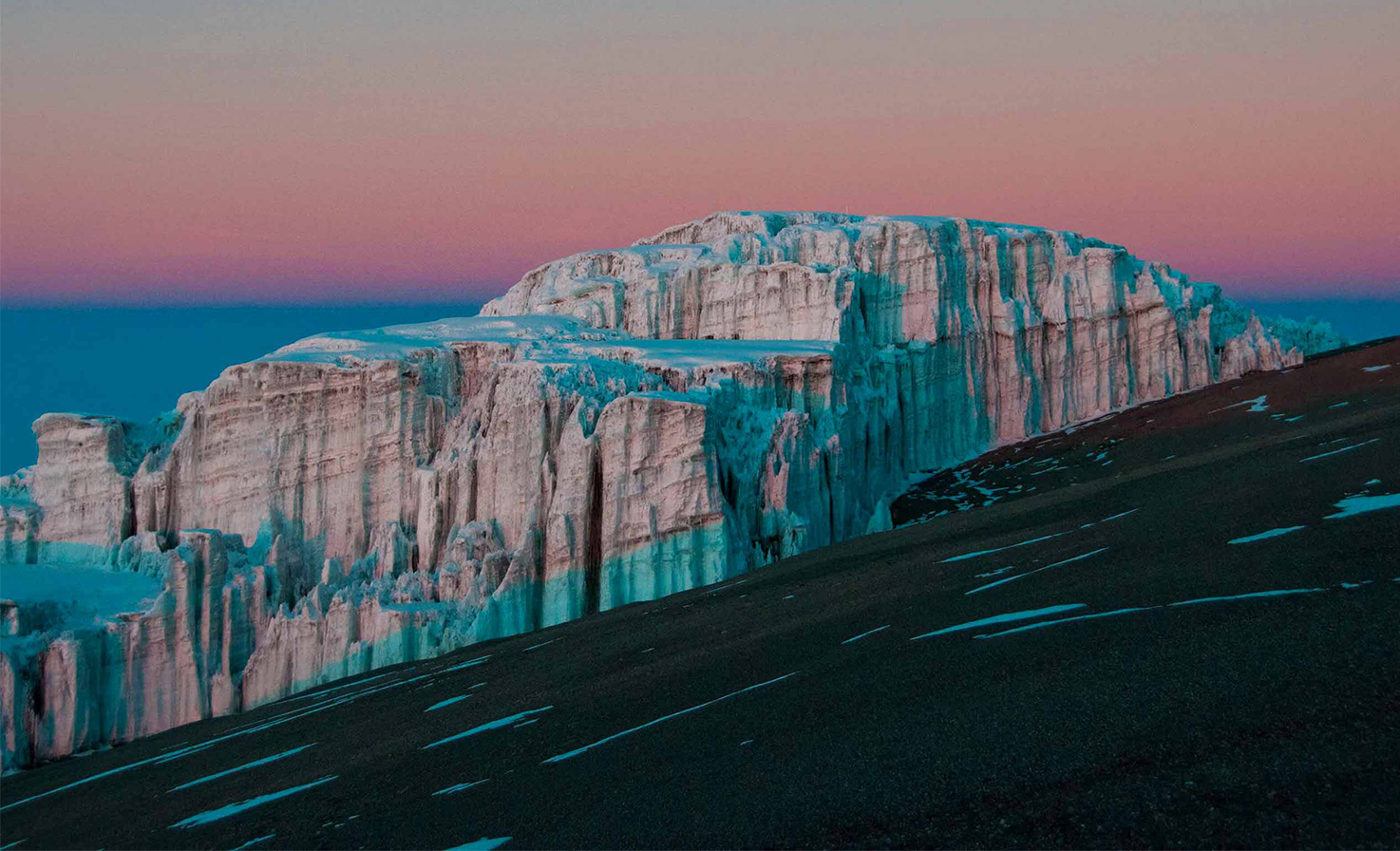
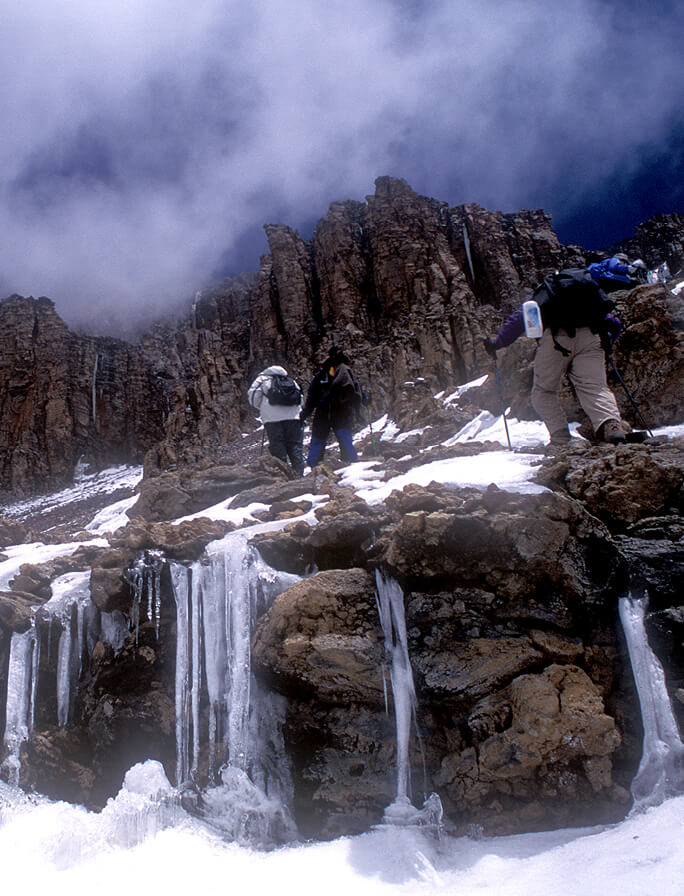
The landscape changes once again as the alpine desert gives way to snow-covered terrain. The route reaches Gilman’s Point on the crater rim, beneath the mountain’s permanent glaciers. From here, approximately two more hours of trekking are required to reach the summit. At 5,895 metres above sea level stands Uhuru Peak, the highest point in Africa.
After the descent and return to the gates of Kilimanjaro National Park, there will be plenty of time to celebrate your achievement.
Should you wish to extend your journey, we can also arrange additional days in Zanzibar or in the national parks of northern Tanzania, including Serengeti National Park, Tarangire National Park, Ngorongoro Conservation Area e Lake Eyasi.
Travel details
Best time to travel
Tanzania's climate allows Kilimanjaro to be climbed throughout the year. From July to October, conditions are generally dry and cool, while December to February offers longer days and milder temperatures. We do not recommend April and May, which correspond to the main rainy season
Duration
6 full days, excluding international flights. Extensions are available.
Price
From €1,500 per person, based on 6 participants. Prices may vary depending on the number of travellers.
Attractions
Tailor your Africa journey
You can add extra stops to one of our itineraries or ask us to create a completely tailor-made journey. We will be delighted to help you plan your ideal trip.
Travel Area
Included activities
Walking safari
Discover more: Walking safari
Trekking
Discover more: Trekking
Hiking
Discover more: Hiking
Optional activities
City tours
Discover more: City tours
Village tours
Discover more: Village tours
Market tours
Discover more: Market tours
Community Projects
Discover more: Community Projects
Cultural tour
Discover more: Cultural tour
Local shopping
Discover more: Local shopping
Canoe excursions
Discover more: Canoe excursions
Additional information
Things to know
Entry requirements
To enter Tanzania, you will need a passport with at least two blank pages and a minimum of six months’ validity remaining. In addition, two documents are required: a visa and an International Health Insurance Certificate.
As entry requirements may change over time, we recommend consulting official travel advice before departure.
Food and drinks
Local cuisine
Tanzanian cuisine reflects the country’s diverse cultural influences, blending Indian, Arab and European flavours. Staple foods include Ugali (maize porridge), Nyama Choma (grilled meat), Pilau (spiced rice) and Chapati. Traditional dishes such as Mshikaki (marinated meat skewers) and Samosas are popular street foods. Be sure to sample Swahili cuisine, particularly its rich and flavourful seafood dishes.
Hygiene and safety
The accommodation and restaurants we select maintain high standards of hygiene. For additional peace of mind, we recommend:
- Drinking water and beverages only from sealed containers or those supplied by your lodge.
- Using bottled or lodge-supplied water when brushing your teeth.
- Avoiding ice in drinks.
- Avoiding uncooked vegetables and seafood.
Currency and payments
Currency: Tanzania Shillings
At the accommodations you’ll stay in, Visa, Mastercard and other major credit cards are commonly accepted. In markets and villages, however, electronic payments are often limited and ATMs may be scarce. For more details, please consult our travel preparation guide.
Health information
Vaccination requirements vary according to nationality and country of origin. For up-to-date health information and malaria prevention advice, we recommend consulting official travel health resources before departure.
What to bring
Luggage
The maximum load carried by porters is 15 kg (35 lbs).
We recommend packing clothing in waterproof bags and protecting electronic equipment with sealed waterproof pouches, ideally double-layered.
Your daypack should contain water, a camera, binoculars, waterproof trousers and jacket, together with anything you may need during the day’s ascent. You may not see your main luggage again until you reach the next overnight stop.
Recommended clothing
You will need both technical hiking clothing and comfortable travel clothing.
We recommend bringing:
- Fleece or warm jumper
- Waterproof jacket
- Waterproof trousers
- Shorts
- T-shirts
- Warm jacket and/or balaclava
- Underwear
- Thermal base layers
- Gloves
- Wool socks
- Trekking socks
- Hiking boots
- Lightweight shoes
- Hat or cap
- Sunglasses
Recommended equipment
Hiking Equipment
- Sleeping bag
- Water bottle
- Walking pole
- Pocket knife
- Daypack
- Torch and spare batteries
- Matches
- Candles
Personal Care Items
- Towel
- Toilet paper
- Soap
- Toothbrush
- Toothpaste
Energy Snacks
- Energy bars
- Chocolate
- Fruit
- Nuts
Photography Equipment
- Camera
- Spare batteries
- Video camera
- Binoculars
Miscellaneous
- Travel journal and pen
- Travel documents
- Small-denomination US dollars
Additional equipment may be available for hire. Please contact us for further information.
Medication
Pharmacies are generally only available in larger towns. We therefore recommend bringing a small supply of medication, skincare products and basic disinfectants.
In addition to your usual travel medical kit, we recommend:
- Sunscreen
- Lip balm
- Blister plasters
- Water purification tablets
Price information
Price includes
- Two nights in a double or triple room before and after the trek, with half-board accommodation
- Qualified mountain guides and mountain equipment
- Kilimanjaro National Park fees
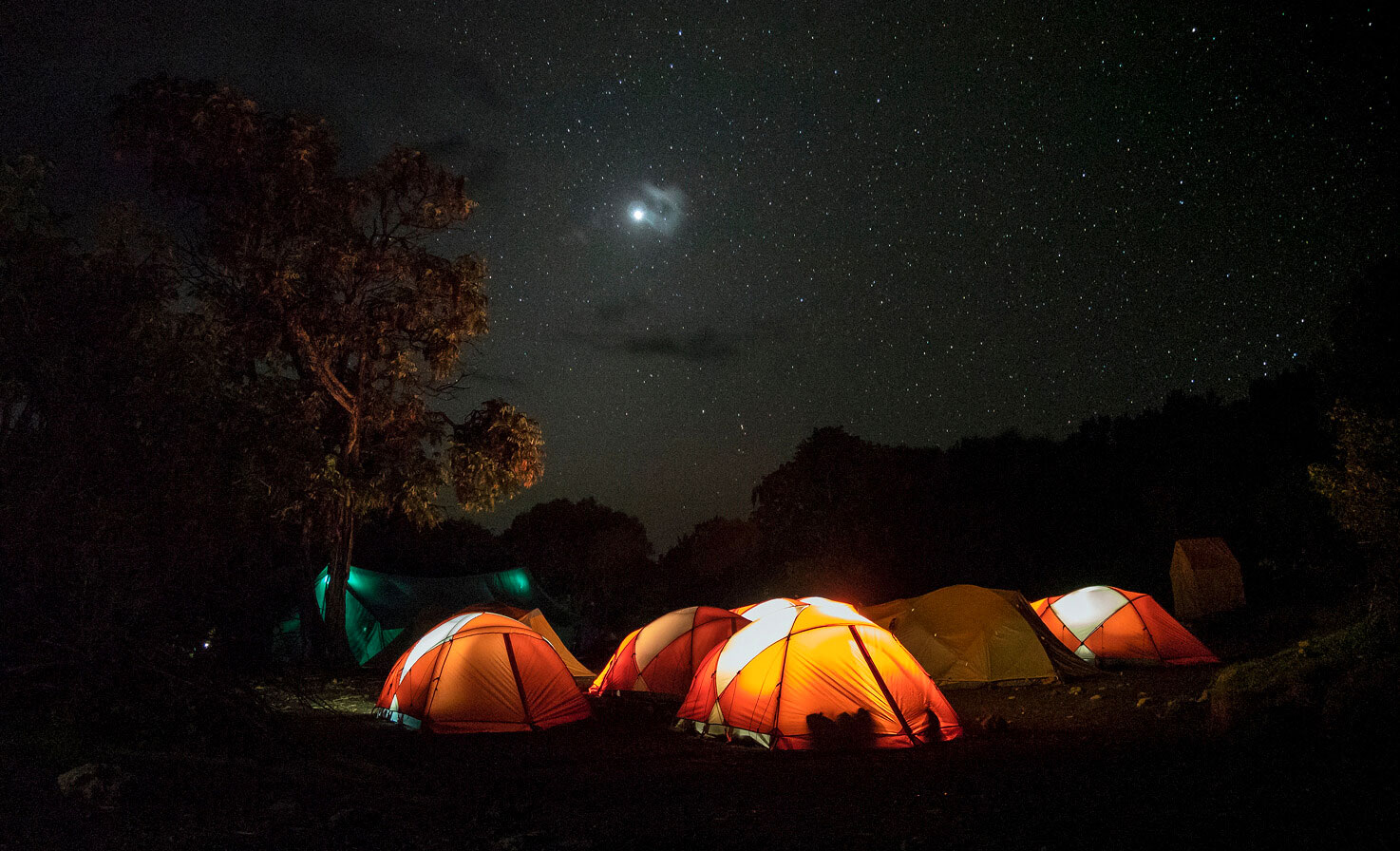
- Hut, campsite and camping fees
- Tents, foam mattresses, cooking equipment and kitchen utensils
- Rescue fees required by the National Park
- Pulse oximeters
- Emergency oxygen
- First aid kit
- Accommodation and park fees for guides, porters, cooks and waiters on the mountain
- Salaries for guides, porters, cooks and waiters
- Boiled drinking water on the mountain
- All meals on the mountain (breakfast, lunch and dinner)
- 1% Community Levy
Price excludes
- International flights
- Tanzania visa
- Travel insurance (medical, cancellation and baggage cover)
- Single room supplement
- Tips for guides, porters, cooks and waiters
- Meals and drinks not specifically mentioned
- Mountain equipment
- Personal climbing equipment
- Personal expenses
- Additional hotel nights beyond the two included
- Optional activities (waterfall tours, cultural village visits)
- Any item not expressly listed under “Price Includes”
Pricing information
Park fees and local levies may be subject to change without notice.
Please remember that this itinerary is intended as a starting point and can be fully tailored to your preferences.
The final price will therefore be recalculated at the time of booking, taking into account any modifications to the itinerary, alternative accommodation choices and any supplier price updates.
Interested in this itinerary?
Complete the form with your enquiry and we will contact you as soon as possible to help plan your next journey.
