From the Kalahari desert to Etosha National Park
A self drive in Namibia allows you to explore the country independently, with horizons changing colors as the road rolls beneath your wheels, giving you the freedom to stop whenever the landscape captures your attention. From the red sands of the Kalahari to the dunes along the Atlantic coast, from the rock engravings of Damaraland to safaris in Etosha National Park. This itinerary takes you on a journey to discover the striking contrasts of Namibia.
12 days of self drive in Namibia
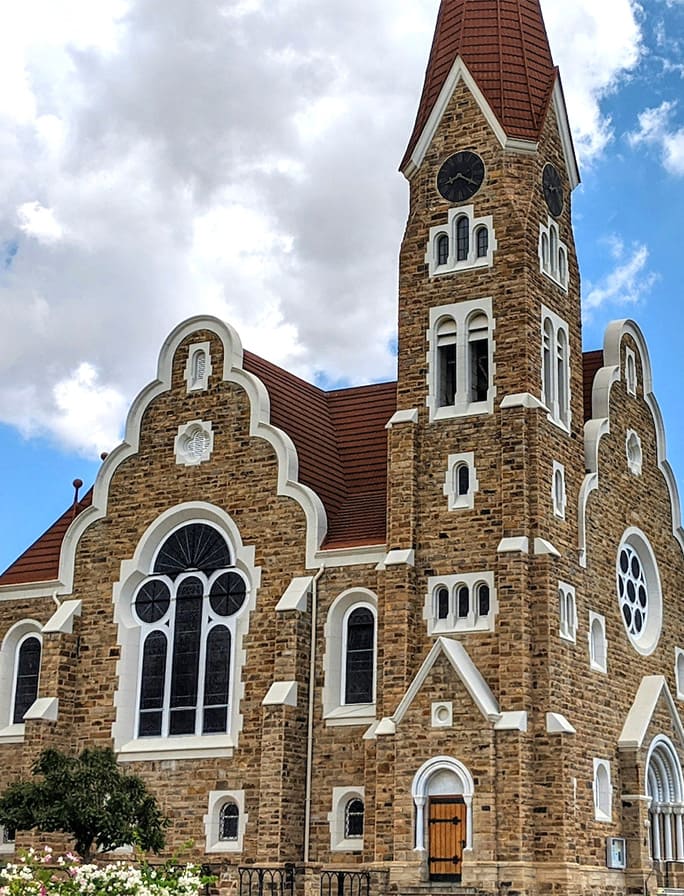
The self-drive experience begins in Windhoek, the capital of Namibia. Upon arrival at Hosea Kutako International Airport, you will be greeted by our representative, who will provide you with your travel documents and assist you in picking up your 4×4 vehicle, which you will use throughout your itinerary. At this point, you can choose to rest or explore the city, which retains a partially European character, a legacy of the colonial period.
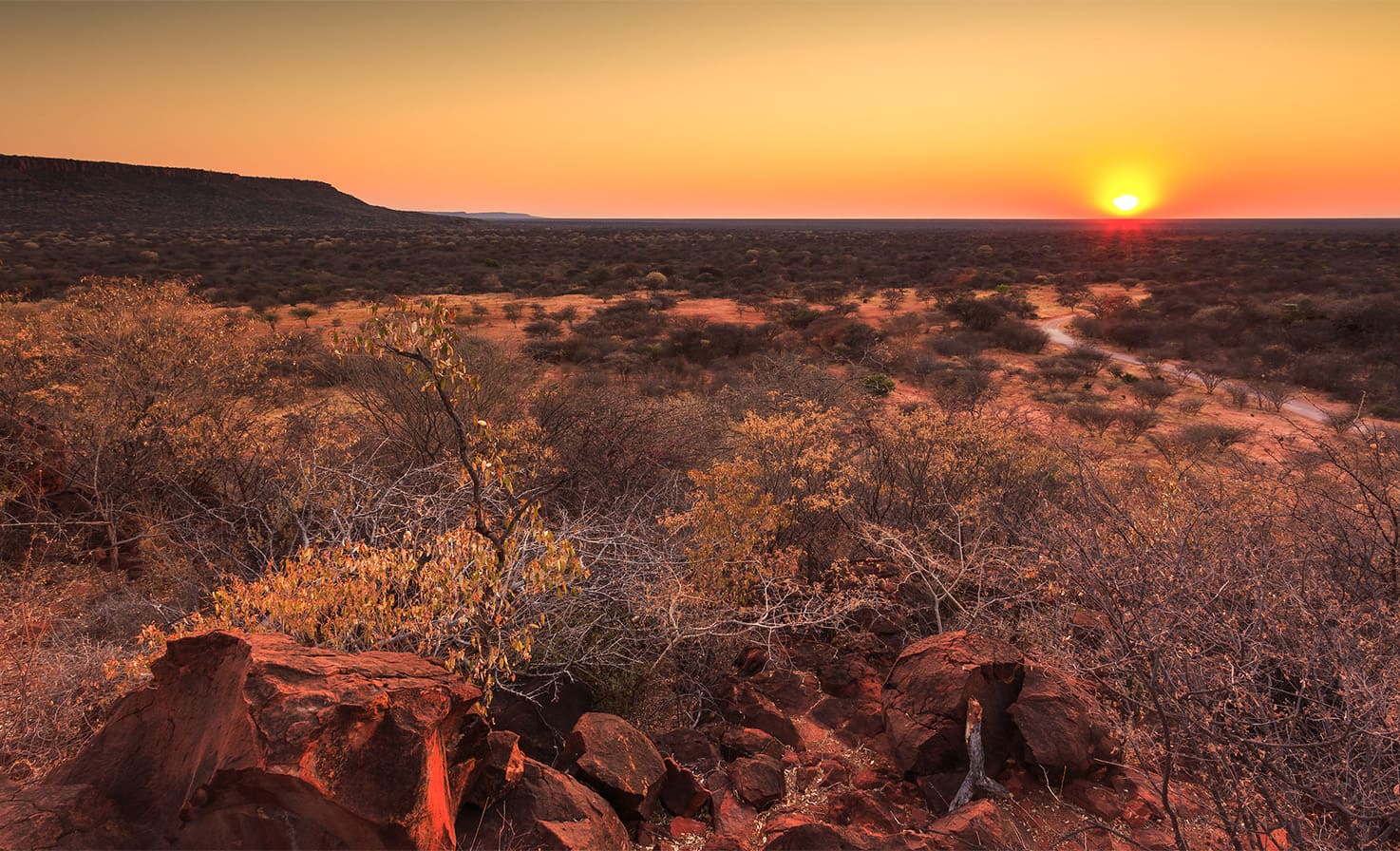
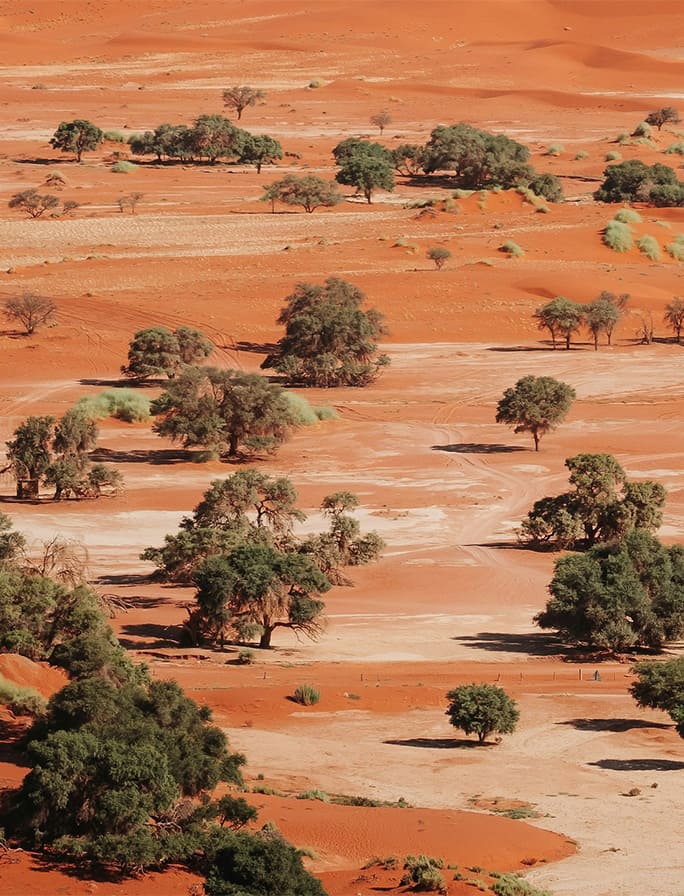
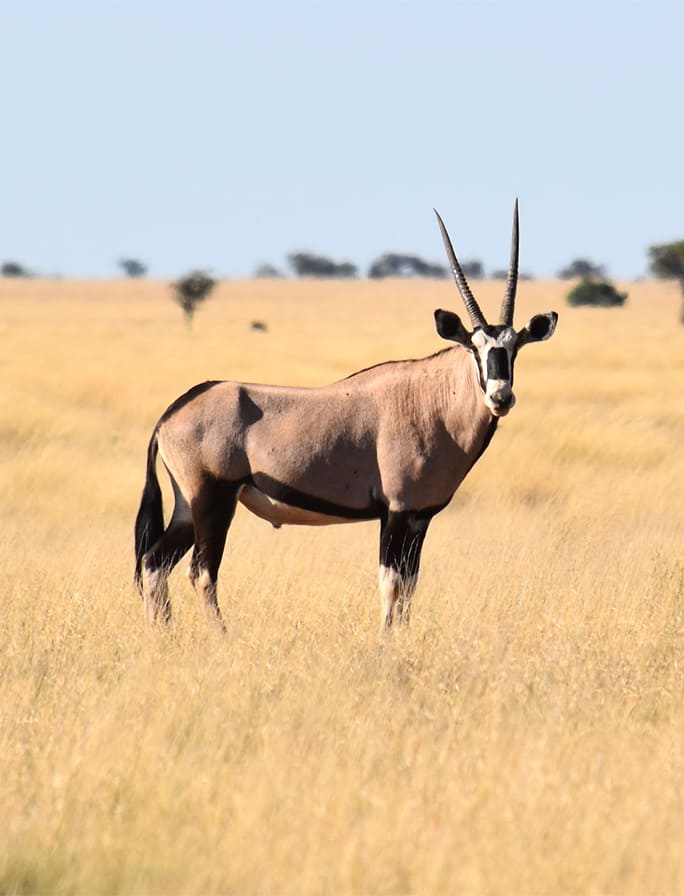
The next day, it will be time to embark on your adventure. You will head south toward the Kalahari, a vast semi-arid savanna rather than a true desert, extending into Botswana and South Africa. The Namibian landscape is characterized by long, parallel dunes of red sand and stretches of golden grass dotted with acacias, providing a habitat for various animal species, including oryx, springbok, and both lions and cheetahs.
Leaving the Kalahari, you will continue southwest towards the Namib Desert, reaching Sossusvlei. This location’s name refers to a clay pan formed when the dunes blocked the flow of the Tsauchab River, which indeed stops here without ever reaching the Atlantic Ocean.
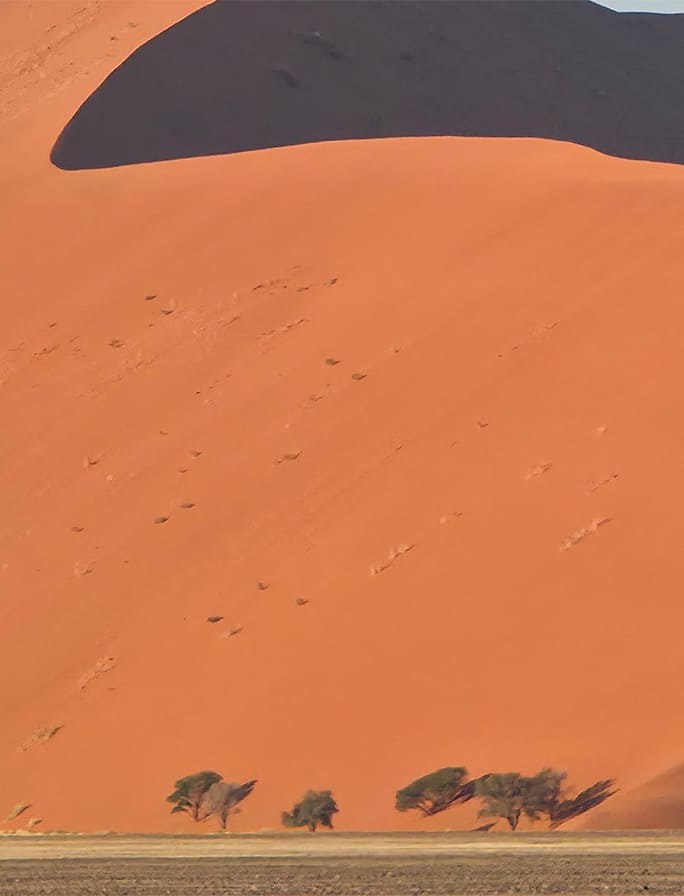
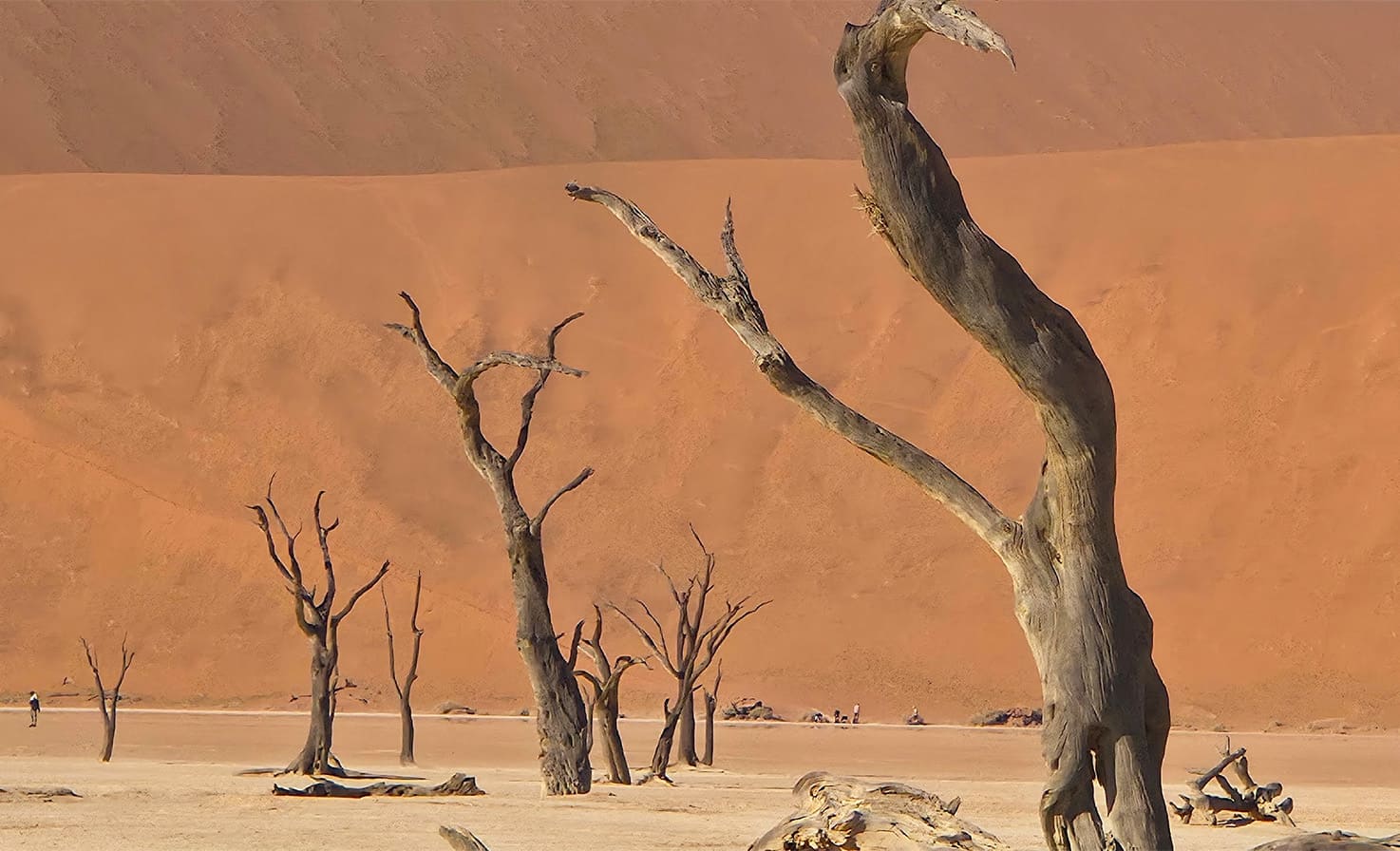
The dunes of Sossusvlei are among the tallest in the world, offering unforgettable colors as the early morning light floods them: climbing Big Daddy or Dune 45 is a spectacular experience. Nearby is Deadvlei, a white clay pan dotted with the charred remains of acacia trees, petrified as if reaching their hands towards the sky. The landscape of the Namib Sand Sea, of which these locations are a part, has been a UNESCO World Heritage Site since 2013.
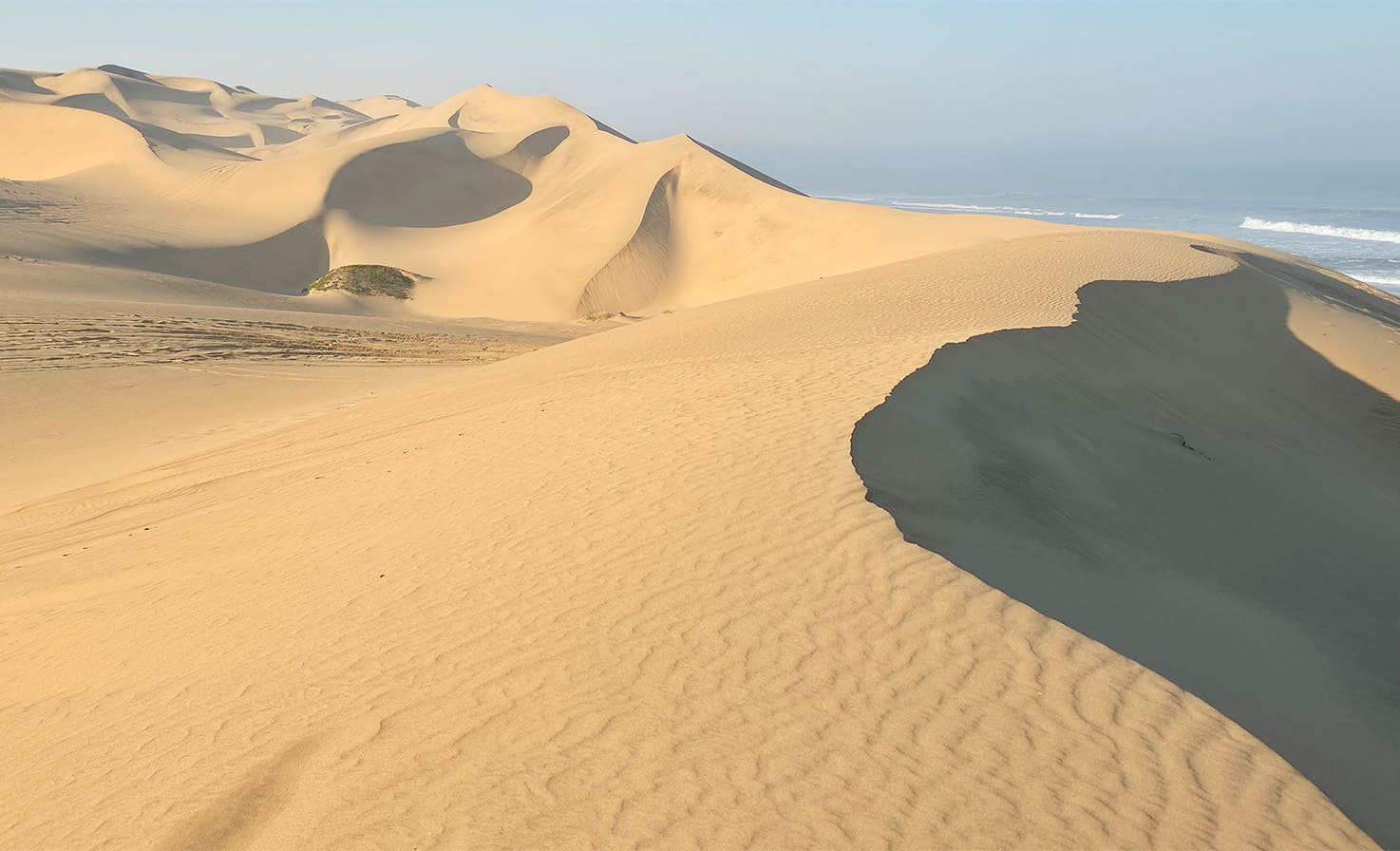
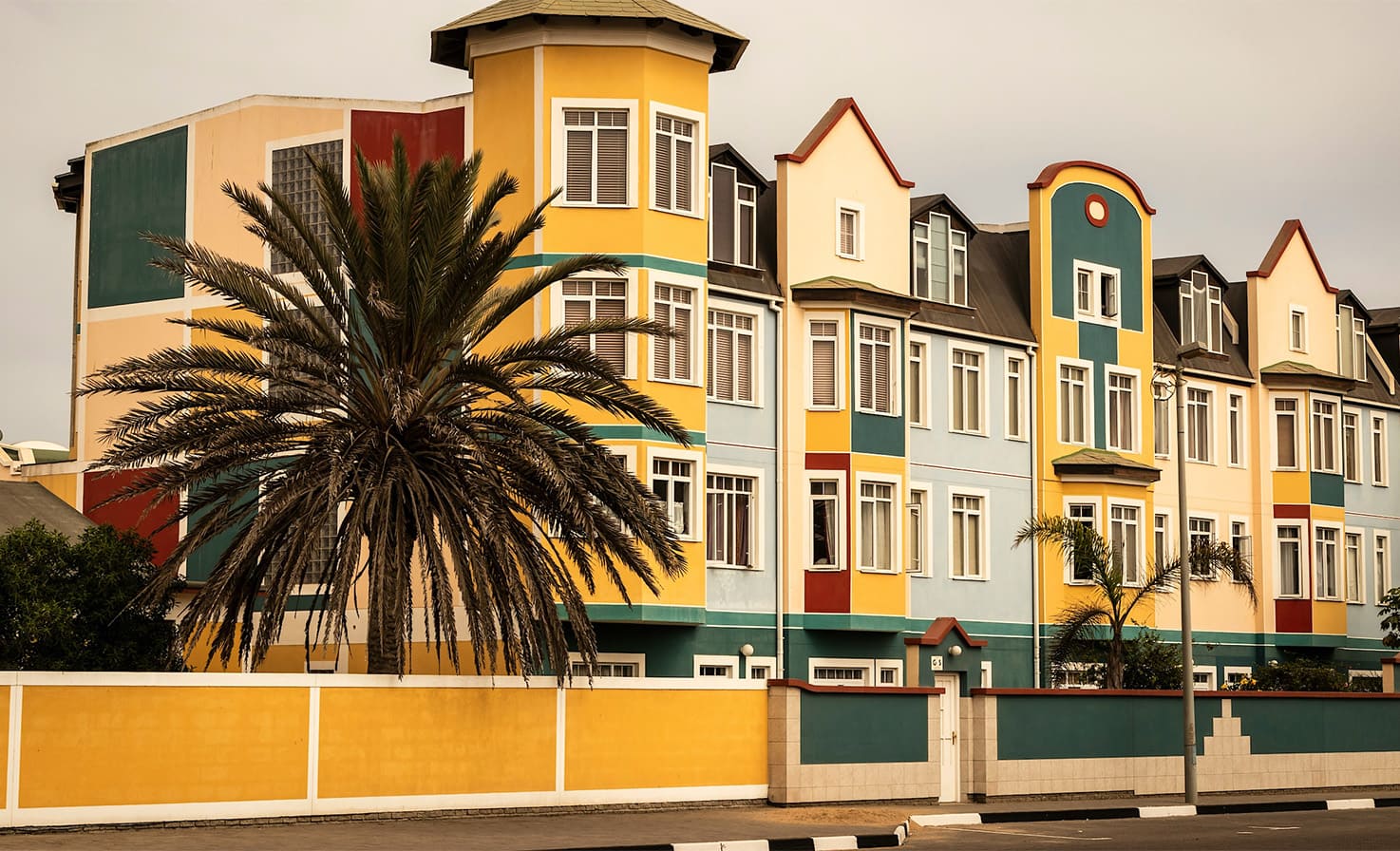
The itinerary will then take you to the coast: Swakopmund, founded in 1892, sits where the dunes of the Namib meet the Atlantic fog. The buildings, the old train station, and even the street names reveal the city’s colonial past, which today represents one of the main holiday destinations in the country. From here, you will have the opportunity to explore the area, starting with a catamaran excursion where you can observe seabirds and the seals that inhabit this area. With a bit of luck, dolphins may also appear, and during certain times of the year, you might even spot migrating humpback whales along the coast. After, you will drive to the coastal dunes of the Namib that touch the ocean.
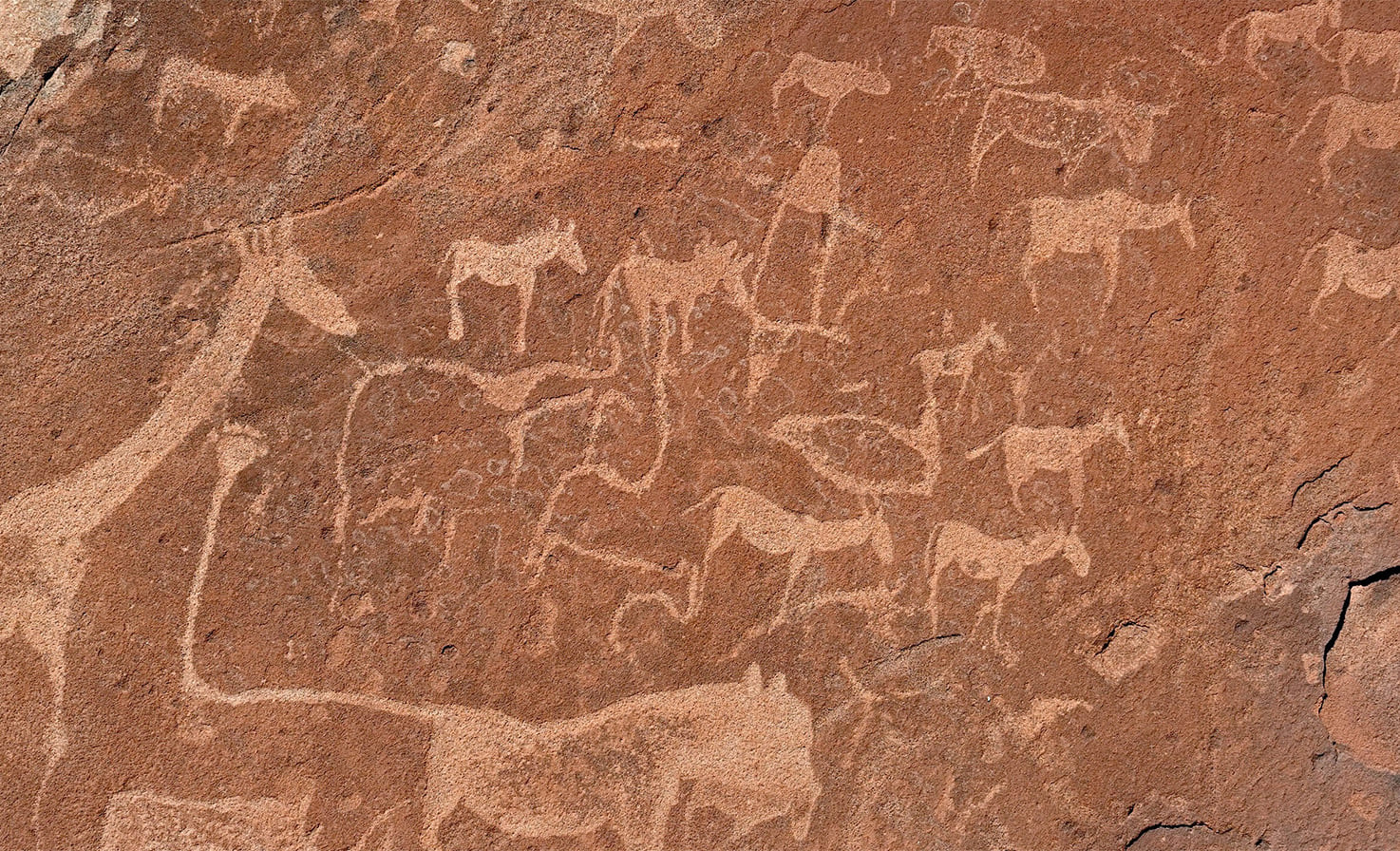
Then the journey will take you back into the interior of the country. You will head northeast to Damaraland to reach Twyfelfontein, a UNESCO World Heritage Site since 2007, which holds over 2,500 rock engravings dating back approximately 6,000 years. On the sandstone rocks, hunter-gatherer communities depicted human and animal figures, hunting scenes, and geometric symbols. In the surrounding area, you can also visit other sites, such as the Organ Pipes, Burnt Mountain, and the Damara Living Museum.
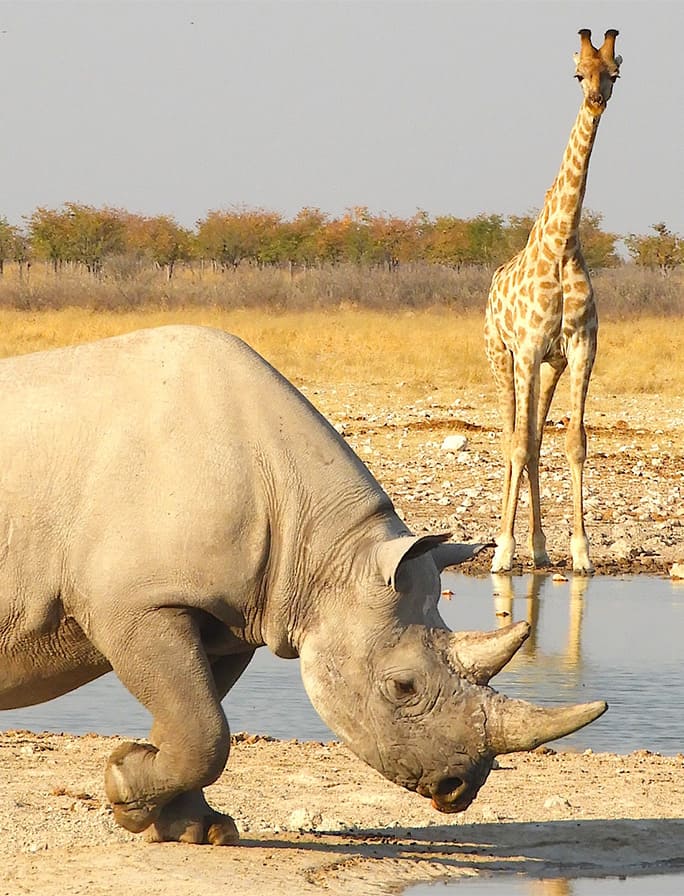
You will continue northeast until you arrive at Etosha National Park, whose name in Oshivambo means “great white place,” referring to the vast salt pan that dominates the region. You will stay in the southern part of the park, near the waterholes where animals gather to drink, and you can venture along the dirt tracks for a self-guided safari. In this area, you may observe lions, elephants, giraffes, white and black rhinos, and many species of antelopes.
The last stop before returning to Windhoek in time for your return flight will take you to the Otjiwa Private Reserve, near Otjiwarongo. You will have the opportunity to go on a guided safaris, both in 4×4 vehicles and on foot.
During your journey, you will stay in lodges and camps chosen for their location and connection to the land, allowing you to enjoy breathtaking views and experience a more authentic connection with nature.
Travel details
Best time to travel
We recommend the period from May to October, the coolest and driest months, when wildlife observation is easier and the climate is more suitable for exploring the desert landscapes independently.
Duration
12 actual days, excluding the outbound and return flights.
Price
The participation fee varies based on the season, the number of participants in the trip, and any changes to the itinerary. Contact us for more information.
Attractions
Otjiwarongo | Etosha National Park, Southern Region | Twyfelfontein | Swakopmund | Windhoek | Sossusvlei | Deserto del Kalahari
Tailor your Africa journey
You can add extra stops to one of our itineraries or ask us to create a completely tailor-made journey. We will be delighted to help you plan your ideal trip.
Travel Area
Included activities
Safari game drives in 4×4
Discover more: Safari game drives in 4×4
Night safari
Discover more: Night safari
City tours
Discover more: City tours
Optional activities
Boat safari
Discover more: Boat safari
Walking safari
Discover more: Walking safari
Village tours
Discover more: Village tours
Market tours
Discover more: Market tours
Community Projects
Discover more: Community Projects
Cultural tour
Discover more: Cultural tour
Spa experience
Discover more: Spa experience
Local shopping
Discover more: Local shopping
Canoe excursions
Discover more: Canoe excursions
Additional information
Things to know
Entry requirements
To enter Namibia, check if, according to your citizenship you must apply for a visa.
Road guide
In Namibia, driving is on the left side of the road. In addition to your driving license, we recommend carrying an international driving permit. The main roads are tarred, but many areas consist of gravel tracks, and the distances between populated centers can be quite long. It’s advisable to refuel whenever you have the chance and to plan your movements during daylight hours.
Food and drinks
Local cuisine
Namibian cuisine combines German and South African influences, with a strong presence of grilled meat and fish. Common dishes include Biltong (dried and spiced meat), Kapana (grilled meat sold by street vendors), and Potjiekos (slow-cooked meat and vegetable stew). Seafood is abundant along the coast. Among beverages, the most popular local beers are Windhoek Lager and Tafel Lager.
Hygiene and safety
The accommodation and restaurants we select maintain high standards of hygiene. For additional peace of mind, we recommend:
- Drinking water and beverages only from sealed containers or those supplied by your lodge.
- Using bottled or lodge-supplied water when brushing your teeth.
- Avoiding ice in drinks.
- Avoiding uncooked vegetables and seafood
Always carry a good supply of water with you during your road travels.
Currency and payments
Local currency: Namibian dollar
At the accommodations you’ll stay in, Visa, Mastercard and other major credit cards are commonly accepted. In markets and villages, however, electronic payments are often limited and ATMs may be scarce. For more details, please consult our travel preparation guide.
Health information
Vaccination requirements vary according to nationality and country of origin. For up-to-date health information and malaria prevention advice, we recommend consulting official travel health resources before departure.
What to bring
Luggage
Try to minimize your luggage to the essentials. Prefer a soft bag instead of a hard or semi-rigid suitcase, as it is easier to fit in the vehicle.
Clothing
You will need comfortable and breathable clothing, lightweight for the daytime and layerable for the nighttime temperature fluctuations. Early morning departures in the Namib and evenings in the desert can be cold, and the climate is cool on the coast even in summer. Closed, comfortable shoes are also useful for walking on the dunes and at archaeological sites.
Essential equipment
Make sure not to forget sunglasses, sunscreen, a hat, a water bottle, and binoculars in your luggage. Remember to bring your entry documents for Namibia, along with a photocopy of your passport and driving license.
Medication
Along the route, we won’t find pharmacies except in larger towns. So it would be wise to bring a small supply of medications. In the travel preparation information, you’ll find a detailed list of clothing, accessories, equipment, and medications we suggest you take with you.
Price information
Price includes
- Airport meeting with our representative
- Travel documentation
- Rental of a 4×4 vehicle with super cover insurance and two spare tires
- All overnight stays as per the itinerary
- Meals as per the itinerary
- SIM card with data allowance
- 1% Community Levy
- Tourism taxes and VAT
Price excludes
- International flights
- Entry visa for Namibia
- Travel insurance (cancellation, baggage, mandatory medical)
- Meals not specified in the itinerary
- National park entrance fees
- Optional activities
- Fuel
- Tips
- Laundry
- Personal expenses
- Everything not expressly mentioned in “What the price includes”
Price variations
Entrance fees to parks and any applicable levies are subject to change without prior notice.
We would like to remind you that this package is just a suggestion and can be personalized according to your preferences.
Thus, the exact price will be recalculated at the time of booking, taking into account any changes to the itinerary, the choice of different accommodations than those proposed, and any fare updates.
Interested in this itinerary?
Complete the form with your enquiry and we will contact you as soon as possible to help plan your next journey.